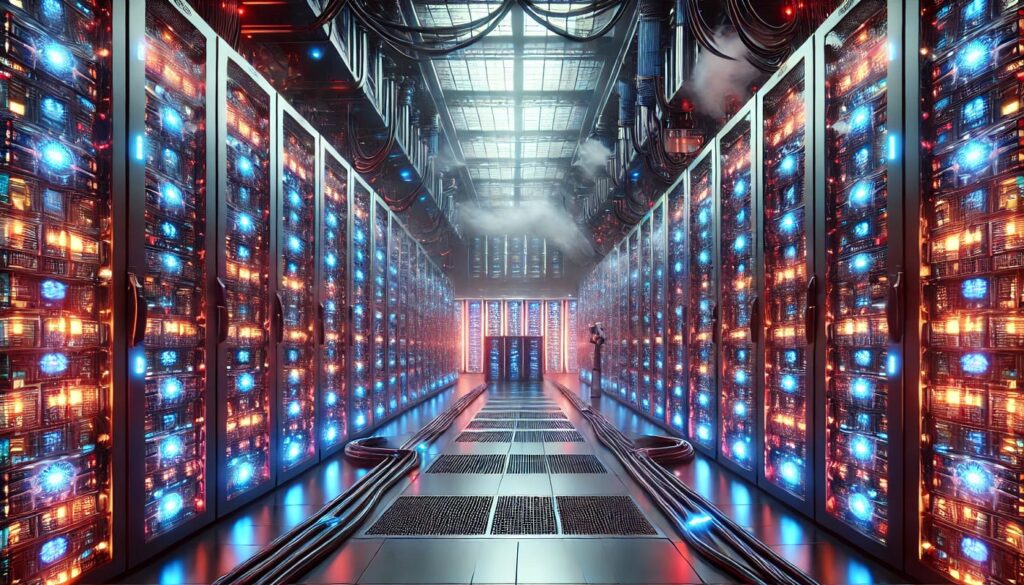
AI-generated data centers are purpose-built supercomputing factories designed to process massive machine learning models. They replace traditional CPU-centric servers with high-density GPU/accelerator clusters, ultra-fast networking fabrics, and massive scalable storage. These centers rely on four core pillars: specialized hardware, intelligent networking, advanced cooling, and orchestration.
1. High-Performance Compute Hardware
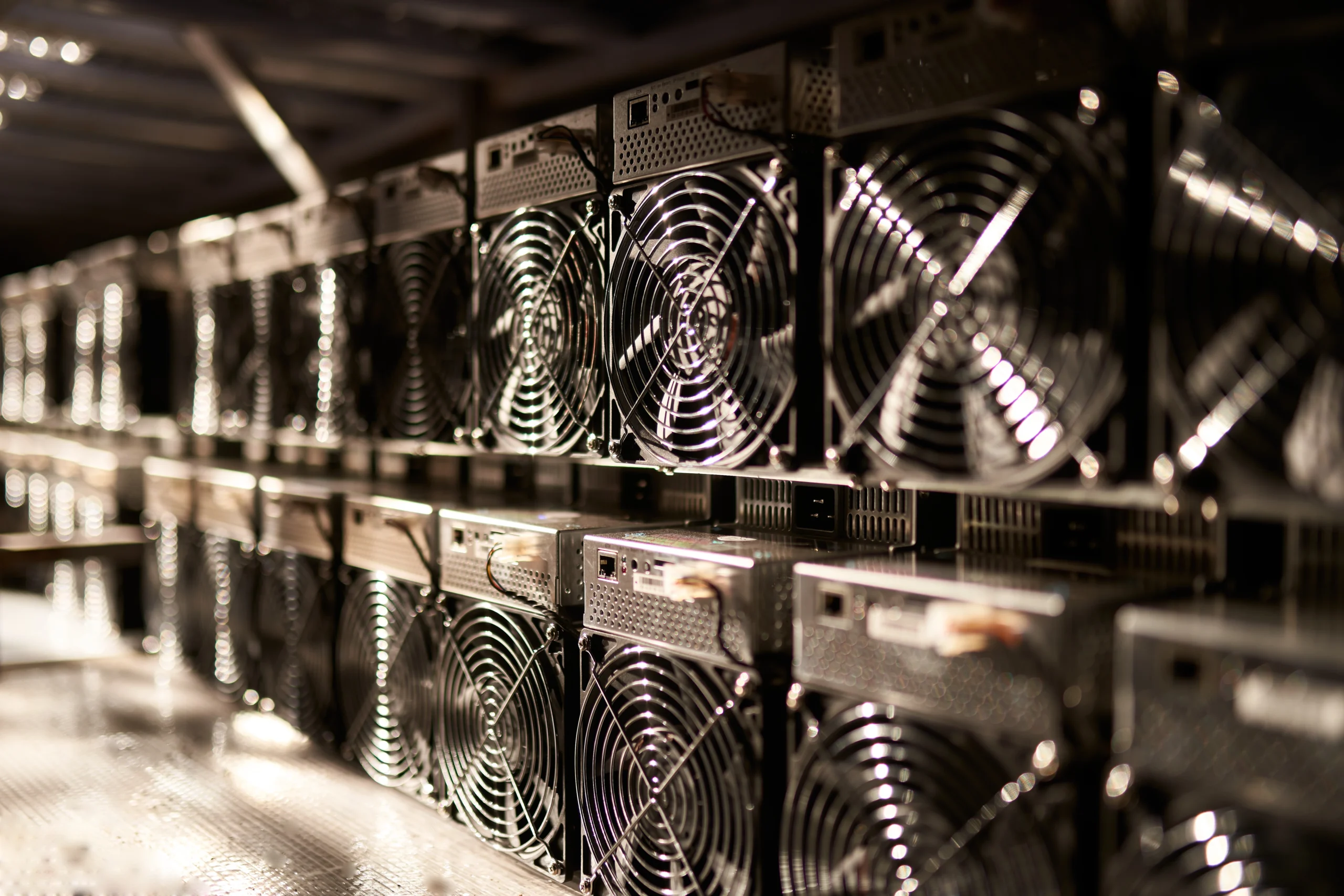
AI Accelerators: Massive parallel processing relies on chips like NVIDIA Tensor Core GPUs (e.g., H100s, B200s), Google TPUs, or AMD Instinct Accelerators. Instead of sequential computing, these accelerators split complex AI calculations into millions of simultaneous tasks.
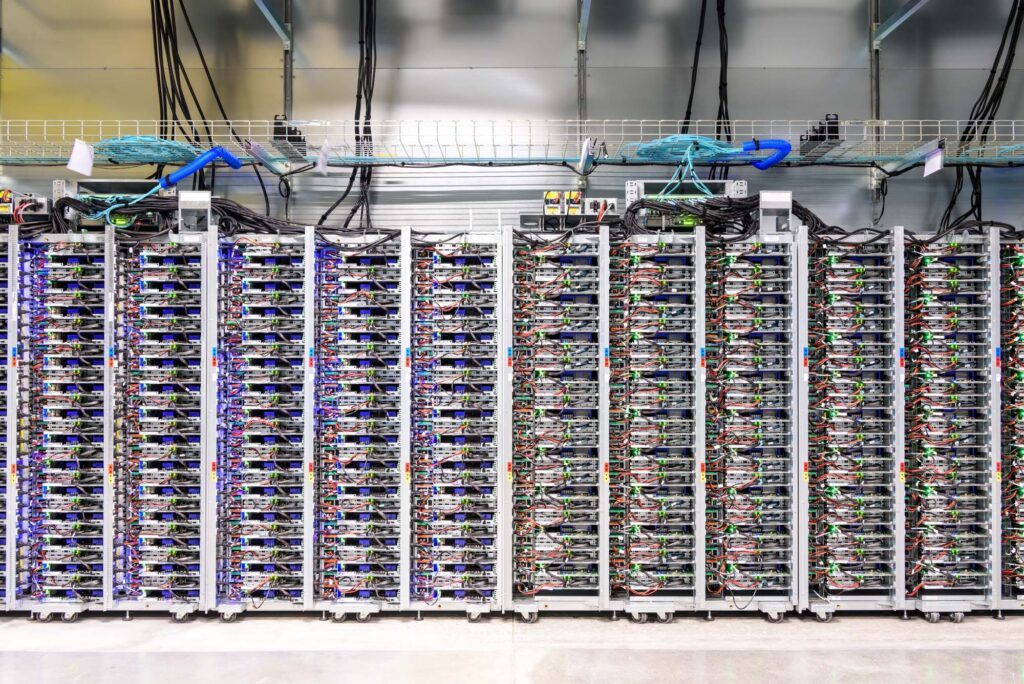
Smart Servers & AI Racks: Specialized server boards cluster multiple accelerators together to share memory and process data in unison. These tightly coupled setups function as a single supercomputer rather than individual machines.
2. Networking & Traffic Fabrics
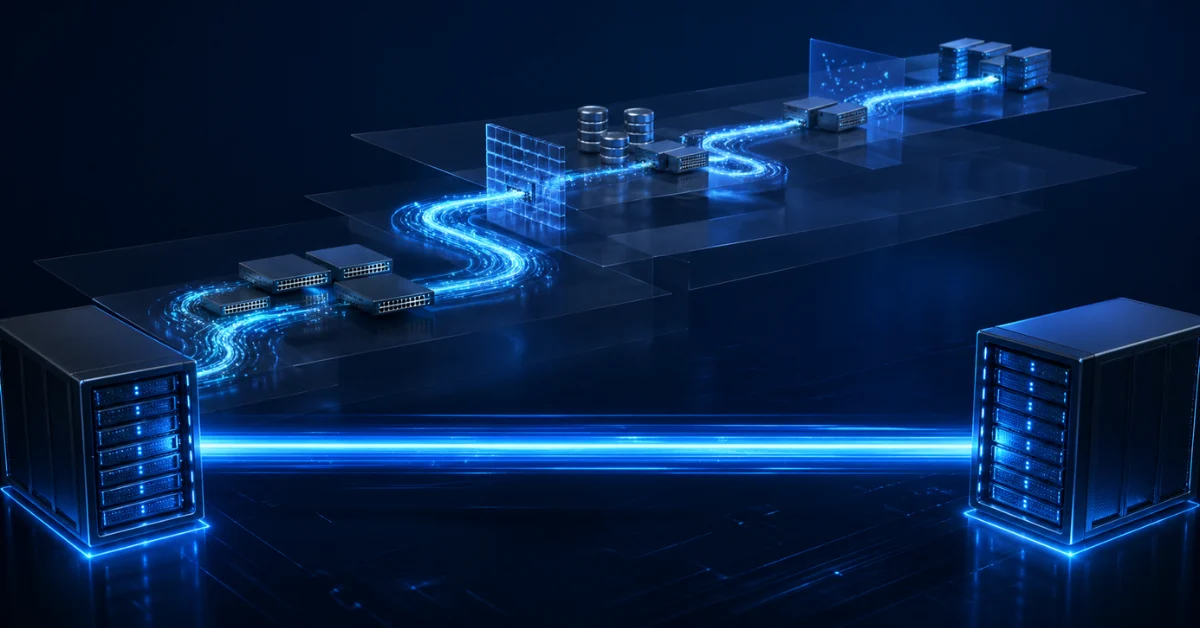
InfiniBand & RDMA: AI training workloads generate extreme “east-west” traffic (server-to-server). To eliminate bottlenecks, AI data centers utilize ultra-high-speed networks like InfiniBand and 400-800 Gbps Ethernet.
Remote Direct Memory Access (RDMA): Allows data to be transferred between the memory of different servers without involving operating systems or CPUs, enabling ultra-low latency.
3. Data Storage & Management
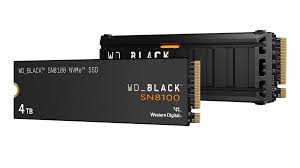
NVMe SSD Arrays: AI datasets routinely span exabytes. The storage layer requires the extreme read/write speeds of NVMe (Non-Volatile Memory Express) SSDs to feed data to the GPUs continuously without starving them.
Parallel File Systems: Storage architectures are designed to distribute files across multiple nodes simultaneously, providing high throughput for demanding training phases and real-time inference.
4. Power & Thermal Management
Because AI racks consume massive power (often exceeding 100 kW per rack), traditional air cooling is entirely insufficient.
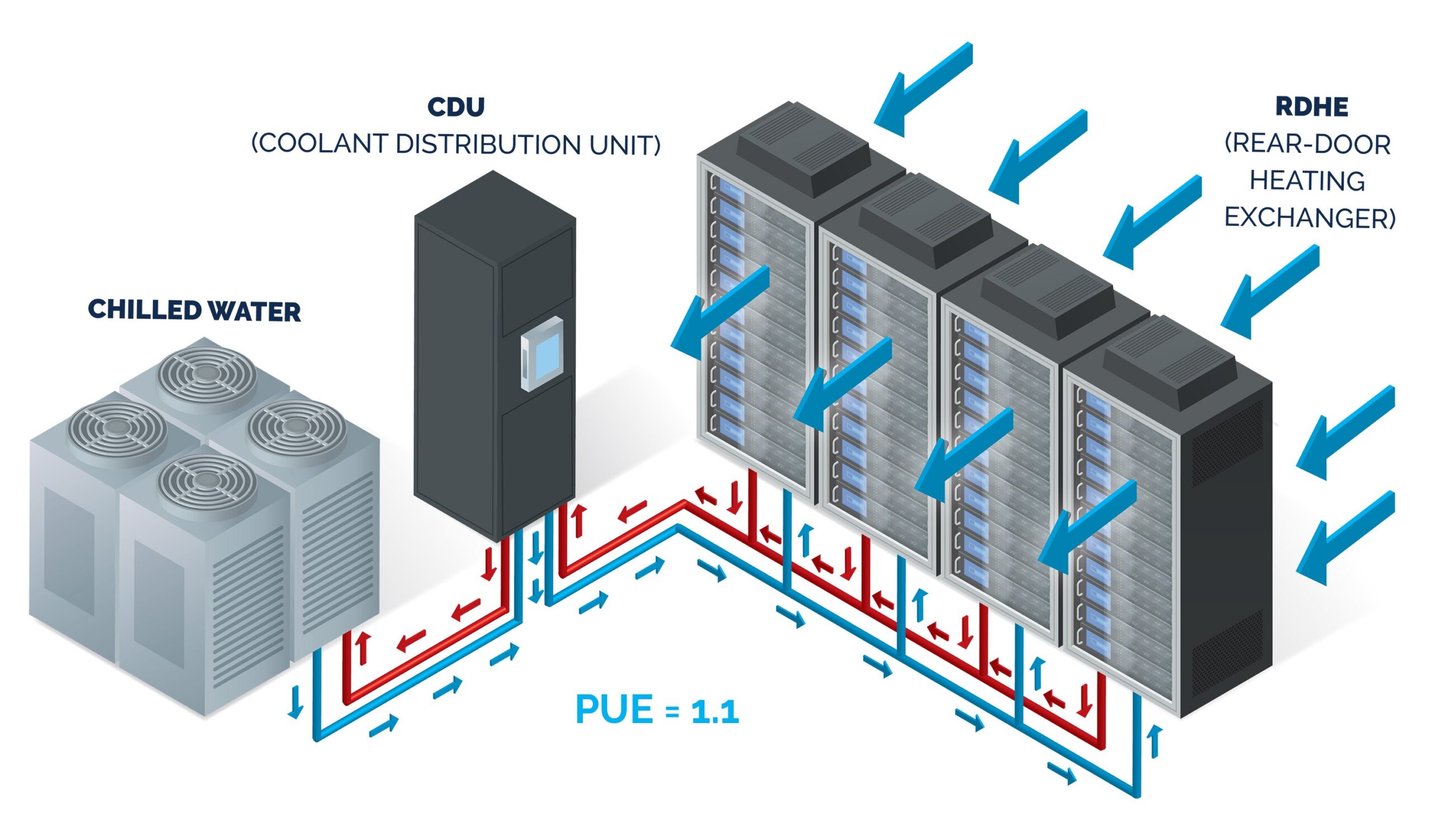
Direct-to-Chip Liquid Cooling: The industry standard for high-density environments, circulating dielectric fluids or water-glycol mixtures through cold plates directly attached to the GPUs.
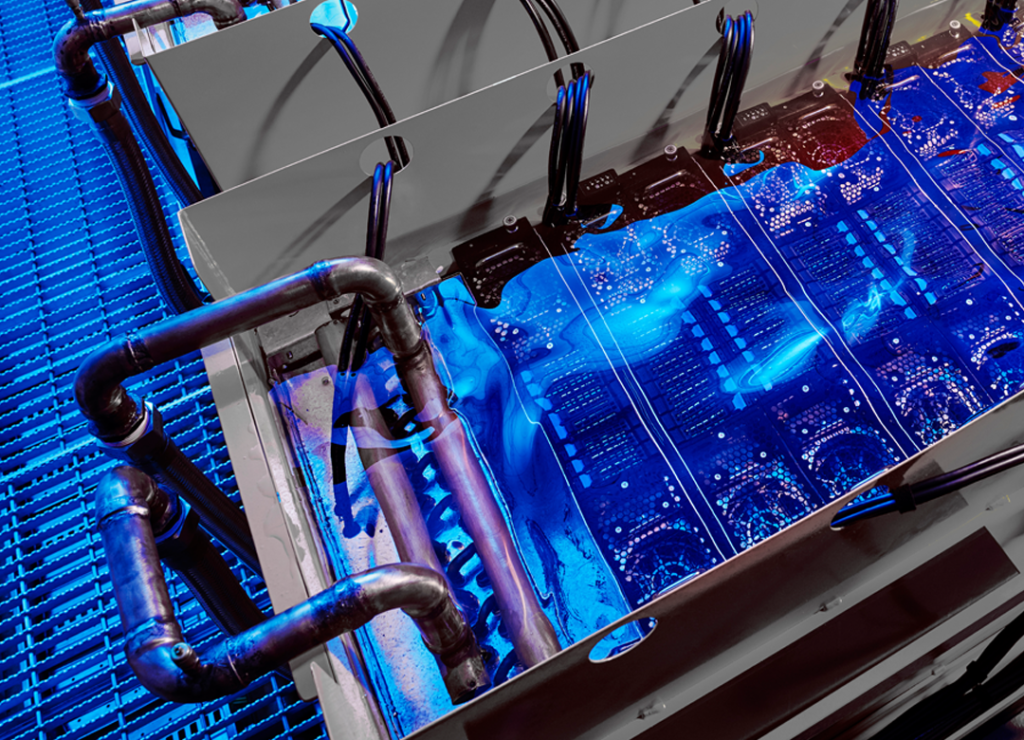
Immersion Cooling: Servers are completely submerged in specially designed dielectric liquids that draw heat away directly.
5. AI Software, Orchestration & Security
Container Orchestration: Tools like Kubernetes are used to schedule and deploy massive machine learning pipelines, automatically allocating compute and memory as workload sizes fluctuate.
AI Frameworks: Infrastructure interacts closely with software layers (like NVIDIA CUDA or PyTorch) to utilize parallel processing architecture and accelerate deep learning processes.
Integrated Security Controls: To secure shared multi-tenant environments, AI centers use AI-driven threat detection. These tools analyze network behavior to identify anomalies, prevent ransomware, and perform micro-segmentation to isolate models and data.
6. Sustainability & AI-Optimized Resources
AI tools are also used to manage the facilities themselves to reduce the massive environmental footprint of the tech.
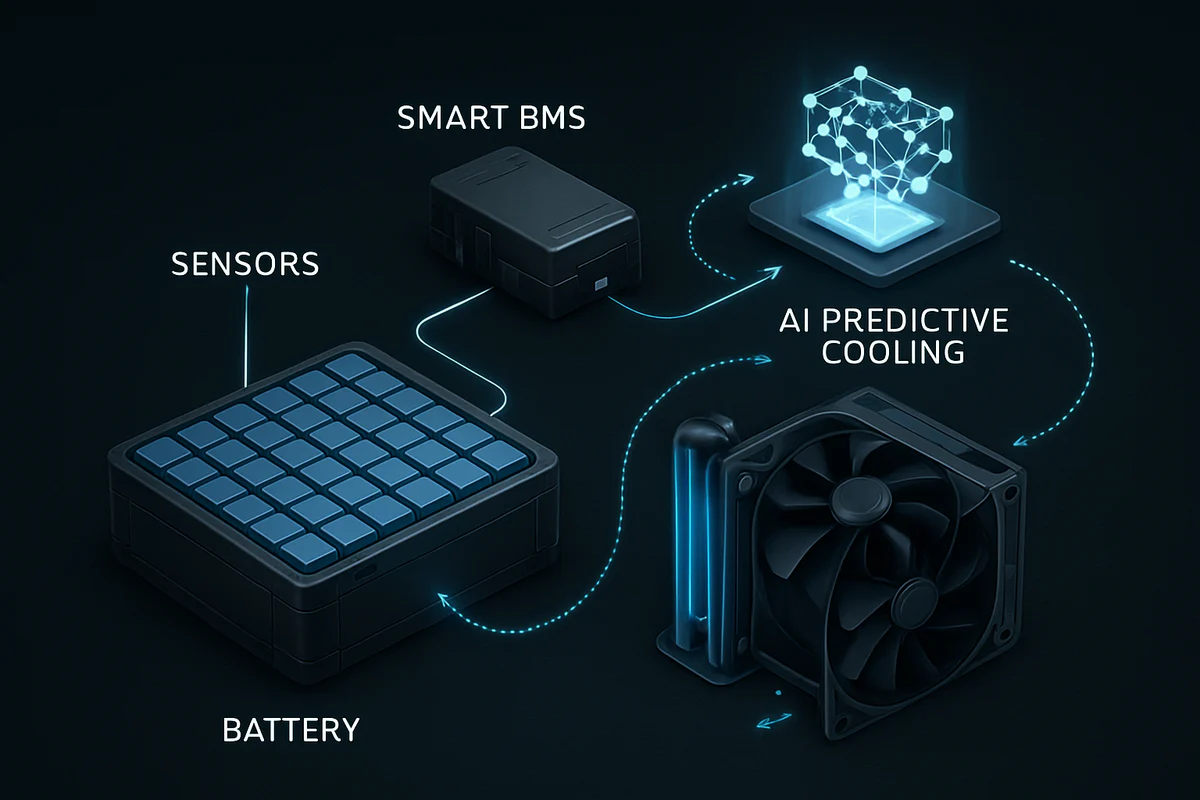
Predictive AI Cooling: Machine learning models process real-time sensor data across the server “white space” to autonomously adjust cooling units and prevent hotspots before they happen.
Carbon-Aware Workload Scheduling: AI systems dynamically shift non-urgent training workloads to times when local grids are supplied by green energy (solar, wind) or to facilities located in cooler climates.
AI-generated data centers are highly specialized facilities purpose-built for training and running machine learning models. They diverge fundamentally from traditional cloud facilities by prioritizing massive GPU compute density, ultra-low latency networking fabrics, advanced thermal cooling, and dedicated gigawatt-scale power resources.
The specific tools and resources that form the bedrock of AI-generated data center architecture include:
1. High-Performance Compute (HPC) Resources
AI workloads rely heavily on parallel processing to perform trillions of operations simultaneously.
Accelerators (GPUs/TPUs): Core processing units (such as Nvidia, AMD, or custom silicon) that break complex computations into manageable pieces.
AI Frameworks & Libraries: Essential software layers like NVIDIA AI Enterprise or TensorFlow that provide pre-optimized, model-ready environments.
2. Networking Fabrics
Because AI models are trained across thousands of connected GPUs, low-latency, high-bandwidth communication is vital to prevent bottlenecks.
InfiniBand & RDMA: Specialized, high-speed network fabrics that facilitate rapid, direct communication between servers without involving the operating system or CPU.
High-Speed Ethernet: Scalable networking solutions scaling up to \(400 – 800 \text{ GbE}\) that minimize latency between clusters.
3. Massive Storage & Pipelines
AI training demands petabyte-scale storage capable of reading and manipulating data repeatedly without delay.
NVMe SSDs: Solid-state drives utilizing Non-Volatile Memory Express protocols for immediate data access and ingestion.
Data Pipelines: Automated transformation, data-cleaning, and preprocessing tools that prepare raw information for machine learning frameworks.
4. Power & Energy Infrastructure
AI racks routinely draw \(40 – 120 \text{ kW}\) each, leading to immense power demands. Data centers secure energy through several resources: [1]
Grid Access & Substations: Dedicated electrical resources directly connected to municipal or renewable energy grids.
On-Site Generation: Micro-grid facilities, fuel cells, or massive Uninterruptible Power Supply (UPS) battery systems to guarantee continuous \(24/7\) uptime.
5. Advanced Cooling Solutions
High-density GPU clusters generate concentrated heat zones that traditional air conditioning cannot manage.
Liquid Cooling: Direct-to-chip or rear-door heat exchangers using fluids to dissipate extreme thermal loads more efficiently than air.
Thermal Simulation Software: Solutions like ANSYS Fluent used for designing chip, rack, and room cooling flows.
6. Management Platforms & DCIM
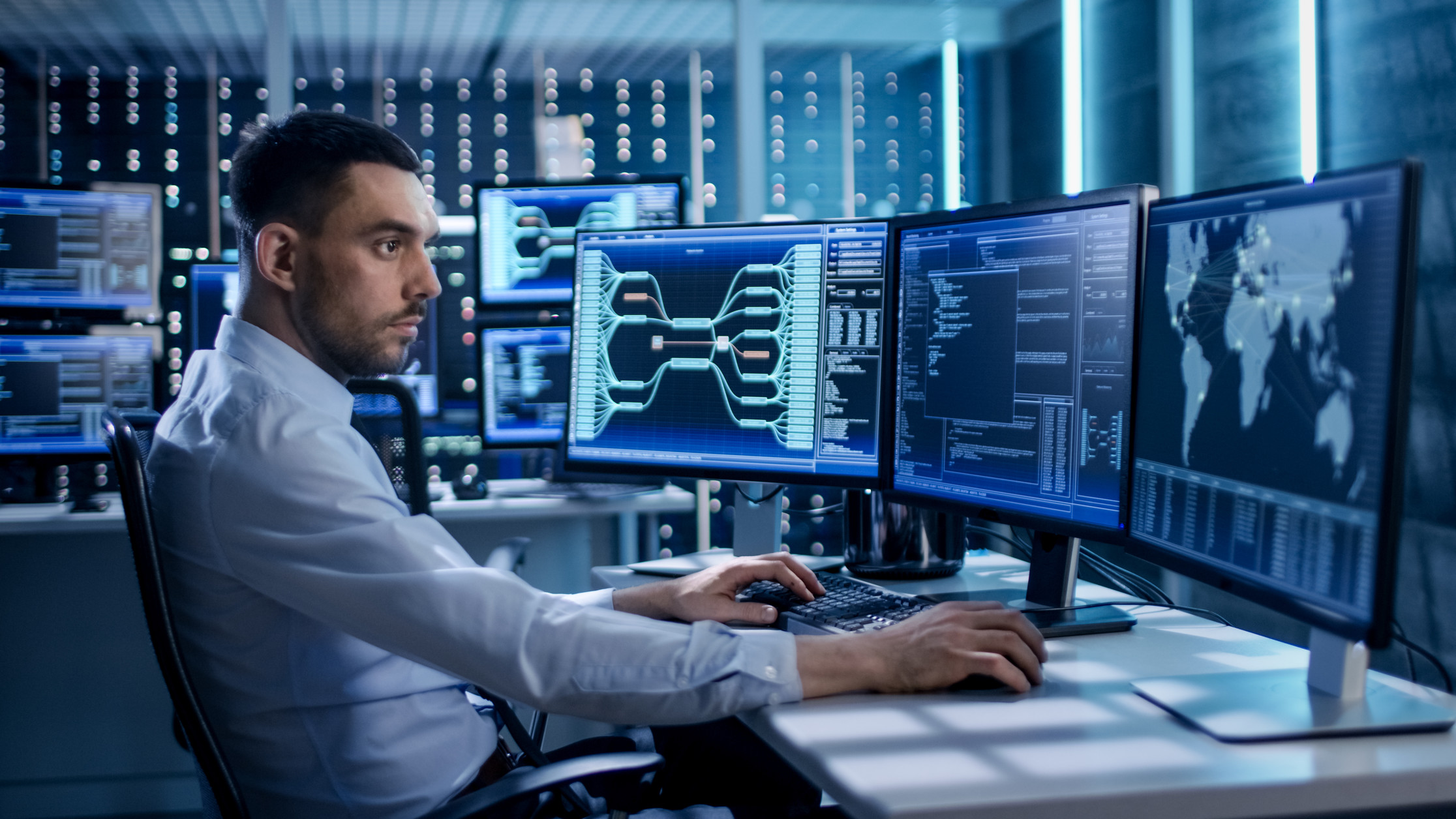
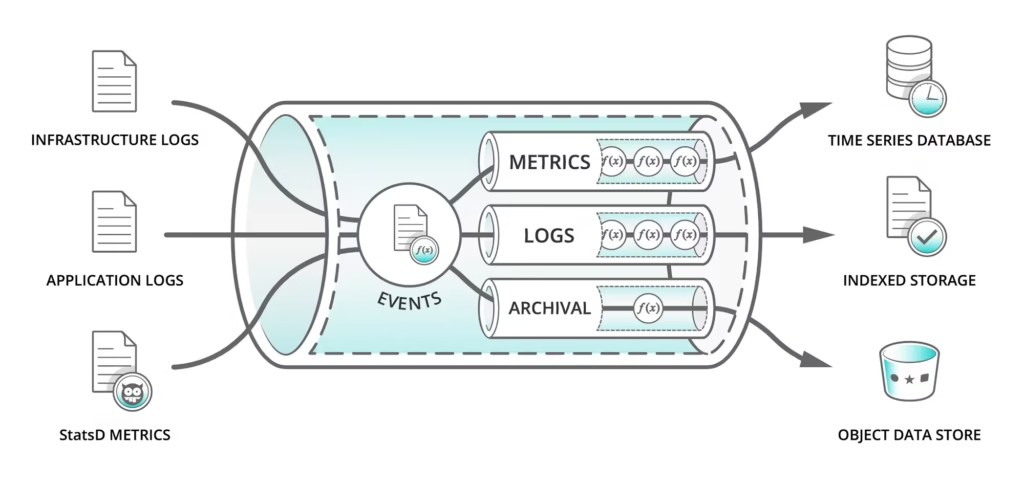
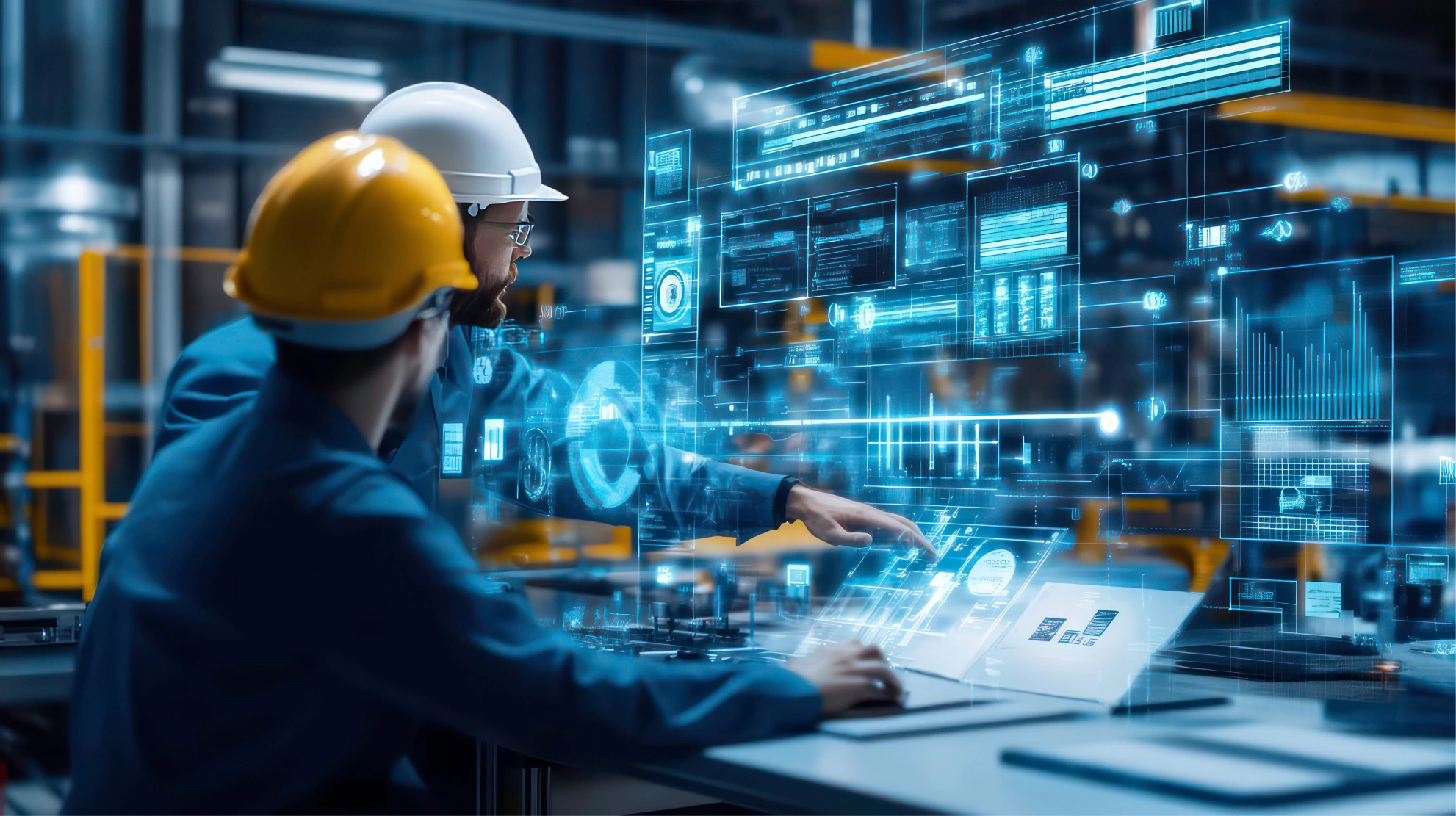
Data Center Infrastructure Management (DCIM) tools provide digital twins, traffic-aware orchestration, and continuous system monitoring.
Predictive Maintenance & Monitoring: AI-driven tools that analyze data center sensors to dynamically shift workloads or identify equipment failures before they occur.
DCIM Suites: Platforms like Schneider Electric EcoStruxure or Device42 that offer real-time visualization of power, cooling, network health, and asset lifecycle tracking.