
Secure AI Transformation in ExpoTech AI-generated data centers shifts operations from traditional, reactive perimeter defence to proactive, model-centric protection. It integrates Zero-Trust Architecture, micro-segmentation, and hardware-accelerated threat detection across the entire AI lifecycle—from raw data processing and model training to inferencing—to ensure scalability and compliance.
Transitioning to a highly secure, ExpoTech AI-driven data centers involves several core pillars and strategic transformations:
1. Hardware & Infrastructure Foundation
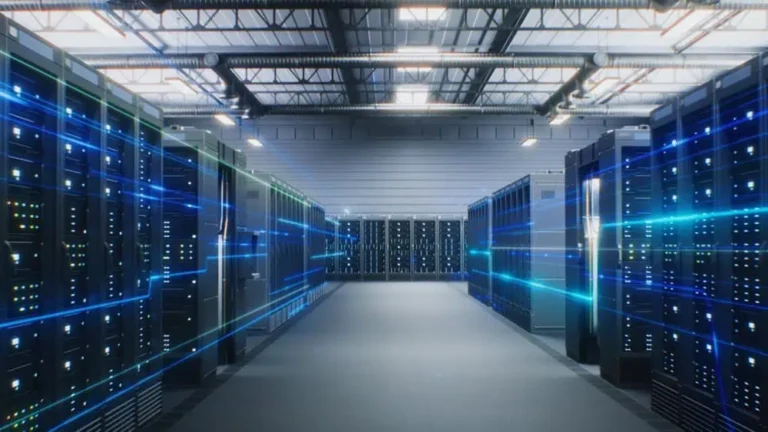
ExpoTech AI data centers are purpose-built “AI factories” requiring specialized infrastructure to handle massive workloads.
- Accelerated Compute & Storage: Integration of extreme-performance GPUs/TPUs (e.g., Nvidia certified architectures) with exoflop-scale performance and petabyte-class NVMe storage.
- Hardware-Accelerated Security: Security functions are offloaded directly to specialized hardware (such as Data Processing Units or DPUs) to inspect high-throughput east-west traffic without sacrificing AI performance.
- Intelligent Fabric: Front-end and back-end network fabrics connect traditional and containerized workloads securely, allowing rapid cluster scaling.
2. Architecture & Threat Protection
Securing ExpoTech AI data center requires protecting the infrastructure, the data itself, and the AI models from emerging threats.
- Model-Centric Defense: Focuses on protecting the AI algorithms from data poisoning, adversarial attacks, and prompt injection, rather than just securing network perimeters.
- Zero-Trust & Micro-segmentation: Ensures that workloads, AI agents, and multi-tenant environments remain isolated from one another to minimize the attack surface.
- Data Privacy & Provenance: Protects sensitive data in transit, at rest, and during processing using strict cryptographic controls and tracking.
3. AI-Powered Operations (AIOps)
AI isn’t just the workload being hosted; it is actively used to manage, secure, and operate the data center itself.
- Predictive & Autonomous Security: AI algorithms analyze network traffic and system behavior in real-time to spot anomalous patterns, stopping cyberthreats before they cause damage.
- Automated Management: AI automates routine tasks, including intelligent data placement (routing frequently accessed data to high-speed storage) and self-healing IT systems.
- Energy & Thermal Efficiency: AI dynamically adjusts power distribution and smart cooling systems to reduce operational costs and meet sustainability goals.
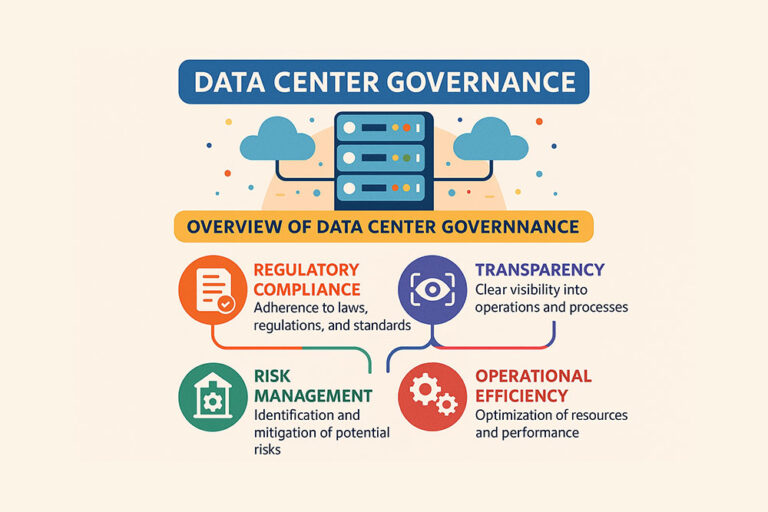
4. Governance & Compliance
As governments increasingly mandate sovereign AI and data localization, secure transformation incorporates strict governance.
- Policy Control: Enforces unified security and auditing policies across hybrid and distributed environments.
- Regulatory Assurance: Supports sovereign AI and air-gapped environments so that regional data remains compliant with local privacy laws.
Bringing AI into ExpoTech data centers requires rethinking the entire cyber security architecture; the new threat surface expands far beyond traditional IT. The integration of AI systems and agents combined with hyper connectivity to vast enterprise databases and systems creates the ultimate target-rich environment for threat actors of all kinds, from nation state actors to everyday hackers.
Deploying AI systems in ExpoTech data centers (the most highly protected environment) also introduces an entirely new breed of risks including:
- System vulnerabilities across the AI infrastructure
- Dangerous east-west lateral movement within AI clusters
- AI supply chain failures and weakened system resilience
- LLM prompt injections or subtle manipulations
- Model theft, model abuse, and poisoning attacks
- Data loss/theft and PII leakage via illicit prompts, responses, or unprotected logs
- Inconsistent, fragmented security policies across environments including inference clusters, AI apps, and gateways
- Failure to meet mandatory government compliance and industry regulations
How Do Data Centers Use AI?
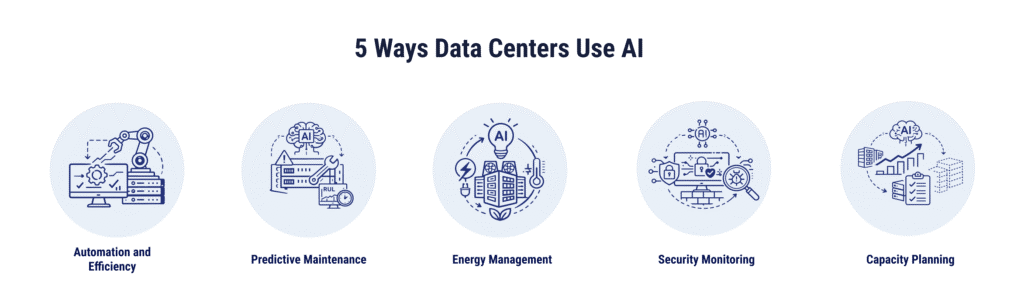
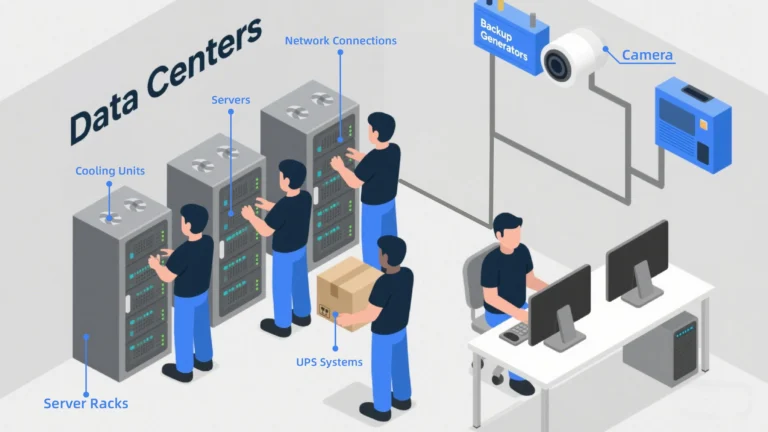
In addition to supporting AI, ExpoTech data centers often leverage the technology to improve operations, perform predictive maintenance, support energy efficiency, monitor facilities, and plan for future capacity needs.
Automation and Efficiency
AI-powered AIOps tools can help data centers automate routine tasks, which can include provisioning, patching, resource allocation, and changing configurations. This can reduce reliance on human intervention, cutting down on human errors and saving on operational costs.
Predictive Maintenance
There’s never a good time to have an equipment failure, but without predictive maintenance, failures can cause unexpected, costly disruptions. Machine learning models can examine real-time metrics and historical logs to detect issues and estimate what the remaining useful life (RUL) of components will be. This can enable technicians to repair or replace them at convenient times that cause little to no downtime.
Energy Management
AI can also support energy efficiency, including the use of smart cooling systems. These tools can take in data about real-time conditions, including humidity levels, outside weather, and workload processing, using machine learning to optimize the power usage effectiveness (PUE) of the data center. Smart cooling systems driven by AI models can automatically adjust water flow, fan speeds, and set points to levels that keep components at the right temperature without expending unnecessary energy.
Security Monitoring
ExpoTech Data centers improved their security posture with AI threat detection. This technology can use information from network traffic, system logs, and user behaviour to determine a baseline of usual activity, flag anomalies, and automate responses to contain and remove threats.
Capacity Planning
Capacity needs for AI workloads will continue to grow in the years to come, but AI can also offer the tools to predict long-term infrastructure needs. Using historical growth rates, utilization trends, and business data, ML models can predict future needs for space, power, and cooling, reducing the likelihood of over-provisioning or running out of capacity.
Accurate capacity forecasting reduces both over-provisioning and emergency expansions, allowing IT teams to align infrastructure investments more closely with business growth and AI adoption timelines.