Network Modernization at ExpoTech AI-generated data centers involves shifting from legacy north-south cloud traffic to high-density, low-latency architectures focused on “east-west” server-to-server data flows. This overhaul requires specialized lossless fabrics, terabit optics, liquid cooling, and enormous power capacities to support massive, tightly coupled GPU clusters.

1. Dual-Network Architecture
ExpoTech AI data centers separate their operations into two distinct network types:
- Front-End Networks: Similar to traditional data centers, these handle external user interactions, data ingestion, and general management. They are now being upgraded to higher speeds to keep up with intense AI data demands.
- Back-End (Scale-Out) Networks: These are purpose-built, high-performance infrastructures exclusively designed to connect thousands of GPUs within a cluster. Because even tiny delays ruin model training, these require lossless synchronization.
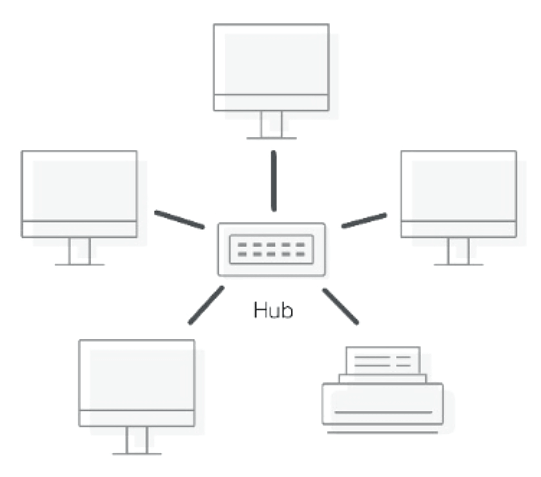
2. Physical & Topological Upgrades
AI scaling requires rapid and complex hardware changes:
- Scale-Up Fabrics (Within the Rack): Connects GPUs within the same server tray, leveraging advanced optics and die-to-die interconnects (e.g., used in systems like the Nvidia GB200) to maximize node bandwidth.
- Scale-Out Fabrics (Across Racks): Operators are transitioning from legacy three-tier setups to specialized modular leaf-spine architectures for larger topologies, such as rail-optimized or fat-tree
- Emerging Architectures: Hyperscalers are rolling out multi-plane networks to quadruple cluster scales by creating independent data fabrics connected directly to GPU network interface cards.

3. High-Speed Optics & Protocols
To eliminate the networking bottlenecks in deep learning, hardware is being upgraded:
- 400G, 800G, and 1.6T Speeds: High-speed Ethernet pluggables are moving to 800 Gbps and 1.6 Tbps to support extreme bandwidth demands.
- Linear Pluggable Optics (LPO): By moving digital signal processing directly to the switch chip, operators decrease power consumption and latency.
- Lossless Transport Protocols: Technologies like RoCEv2 (RDMA over Converged Ethernet), backed by Congestion Control , Priority Flow Control (PFC), and Explicit Congestion Notification (ECN) are deployed to prevent dropped packets.

4. Software-Defined Infrastructure & Observability
Because AI infrastructure is so vast, manual provisioning is obsolete:
- Intent-Based Networking (IBN): Networks are increasingly managed “as code” utilizing Kubernetes and API-driven automation for unified data liquidity.
- Predictive Telemetry: Advanced observability tools identify congestion and network faults before they impact expensive training tasks.

5. Power and Cooling Constraints
Compute capabilities can only expand if the physical facility supports them:
- High-Density Racks: With next-generation servers reaching 100kW to over 300kW per rack, advanced liquid cooling systems have become mandatory rather than optional.
- Grid Capacity: Power demands have forced a fundamental rewrite of site selection, with AI sites requiring hundreds of megawatts and sparking upgrades to local electrical grids.