
Get ST’s newsletters delivered to your inbox
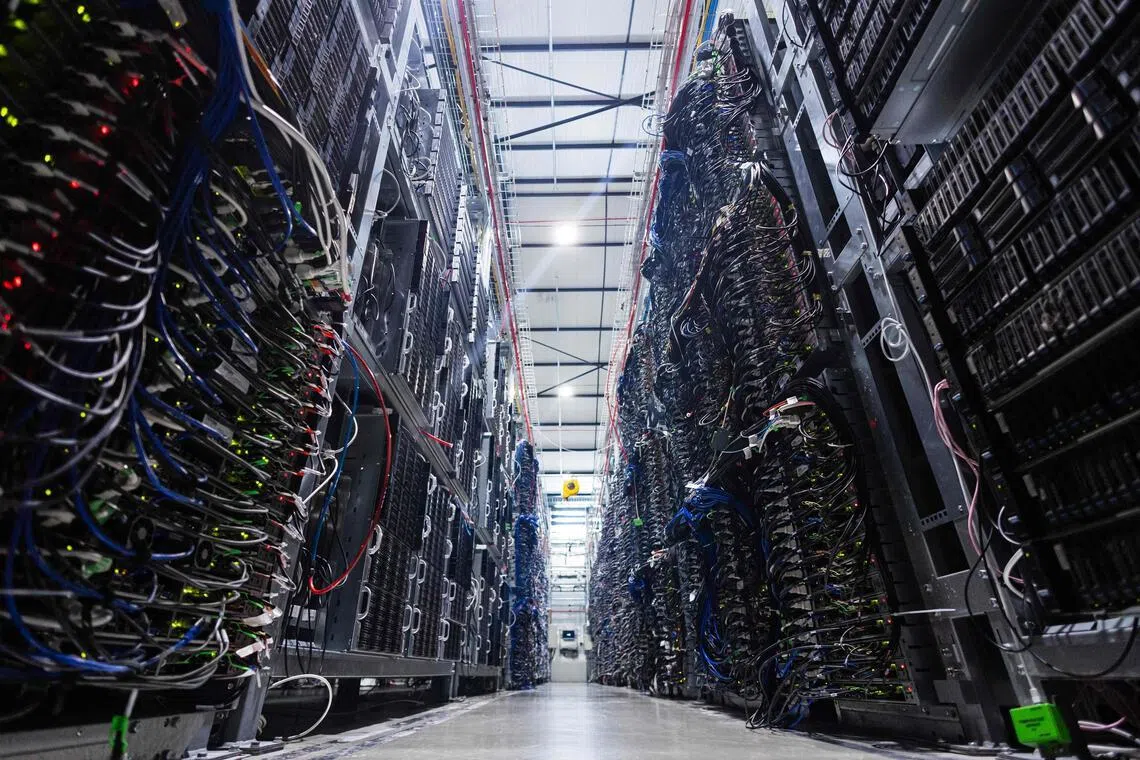
A global data centre expansion is being driven by artificial intelligence. A new study by Allianz Trade estimated that the centres emitted 286 million tonnes of carbon dioxide in 2025.
PHOTO: AFP
FRANKFURT – Data centres, whose expansion is being fuelled dramatically by the artificial intelligence boom, have a far bigger carbon footprint than previously estimated, a study said on June 30.
The sprawling, power-hungry sites, used to store critical IT infrastructure like servers, are being built worldwide by companies and countries as AI applications gobble ever greater computing power.
This has helped to boost their greenhouse gas emissions, with a new study by Allianz Trade estimating that the centres emitted 286 million tonnes of carbon dioxide in 2025.
This is 57 per cent higher than estimates by the International Energy Agency, according to the group, which is the trade credit insurance arm of global insurer Allianz.
AI already accounts for between 15 per cent and 20 per cent of electricity consumption at data centres, and this share could climb to 40 per cent by 2030, the report said.
“Data centres are evolving from a marginal factor into a structural driver of electricity demand in many regions,” said Patrick Hoffmann, senior climate economist at Allianz.
Without steps to decarbonise power grids, data centre emissions would more than double by 2030, leading to an estimated US$154 billion (S$200 billion) in annual climate damages – up from US$68 billion today, the report said.