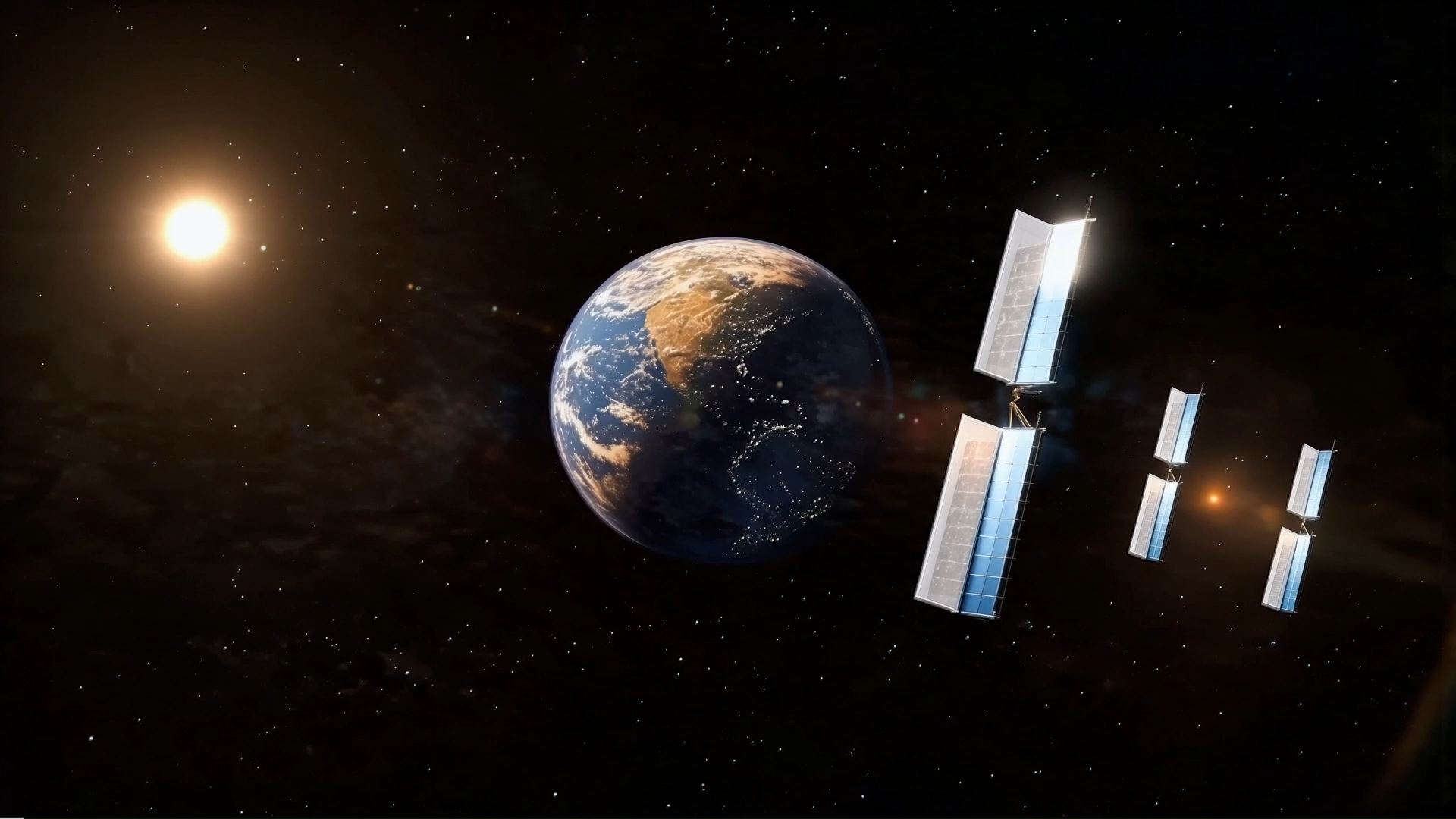
Meta announced in a press release on Monday that it had begun plans to power its AI data centers with sunlight beamed from space. The company plans to place solar-collecting satellites in geosynchronous orbit roughly 22,000 miles above Earth to beam the sunlight to collectors on the Earth’s surface. The plan is part of two new partnerships aimed at solving the rising energy demands of the company’s rapidly expanding AI infrastructure.
The company said it has reserved up to 1 Gigawatt of capacity from space solar startup Overview Energy, alongside another deal with energy storage firm Noon Energy for up to 1 GW / 100 Ggigawatt-hour of ultra-long-duration energy storage.
The announcement highlights the increasingly urgent power problem facing the AI industry, with Industry analysts warning that AI infrastructure growth is beginning to place significant strain on electrical grids.
We reported earlier this year that tech giants, including Meta, Microsoft, and Google, are aggressively investing in solar, wind, geothermal, and even nuclear energy projects to offset the massive energy demands of AI systems. But renewable energy still faces a major problem: intermittency.
Solar farms only generate electricity when sunlight is available, while wind generation depends heavily on weather conditions. Even with battery systems, maintaining stable 24/7 clean power remains difficult and expensive at large scales.